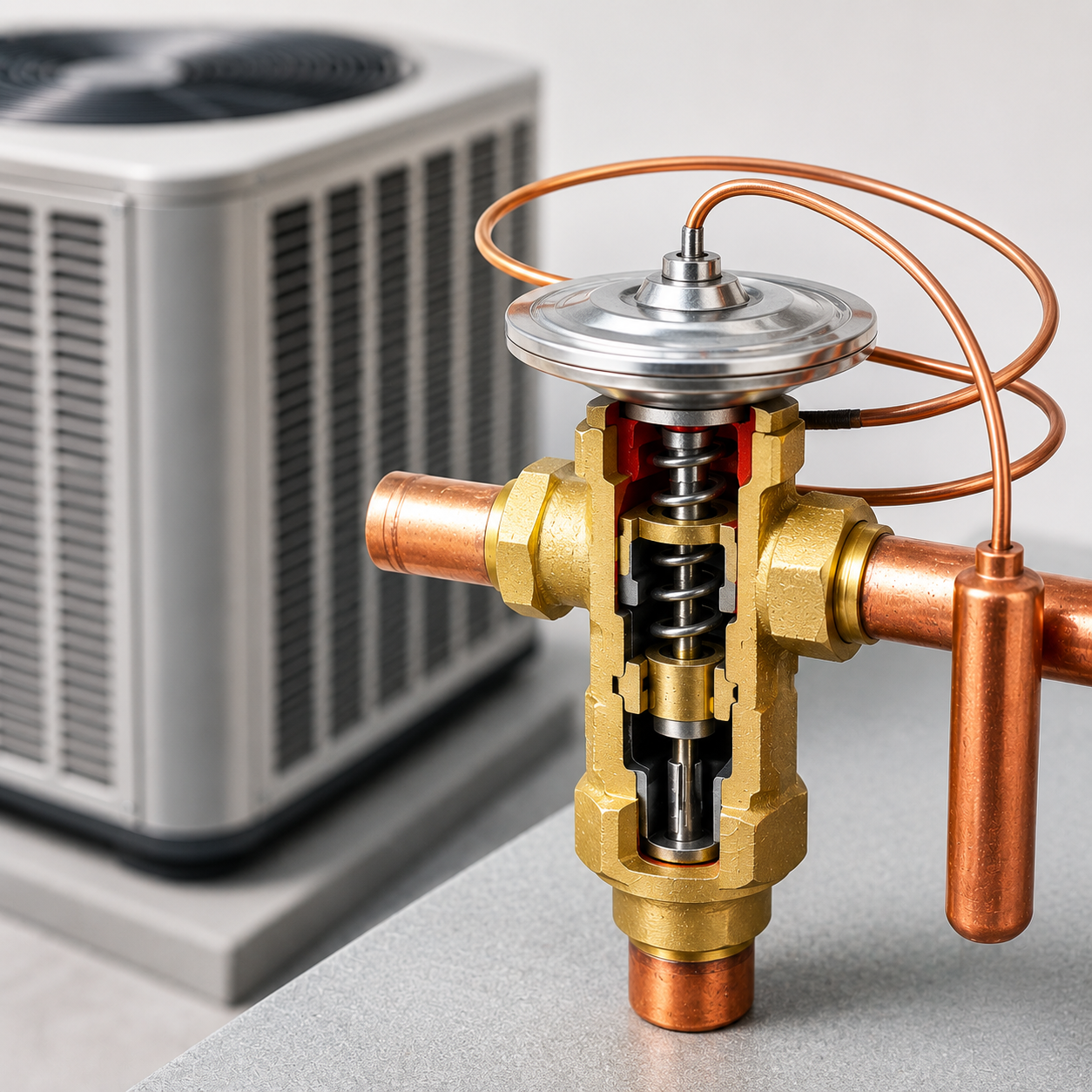
If you’ve ever scheduled HVAC repair because your air conditioner wasn’t cooling properly, the expansion valve may have been part of the problem. This small component plays a major role in your cooling system’s performance. Although it often goes unnoticed, the expansion valve helps regulate refrigerant flow and supports efficient operation throughout your HVAC system.
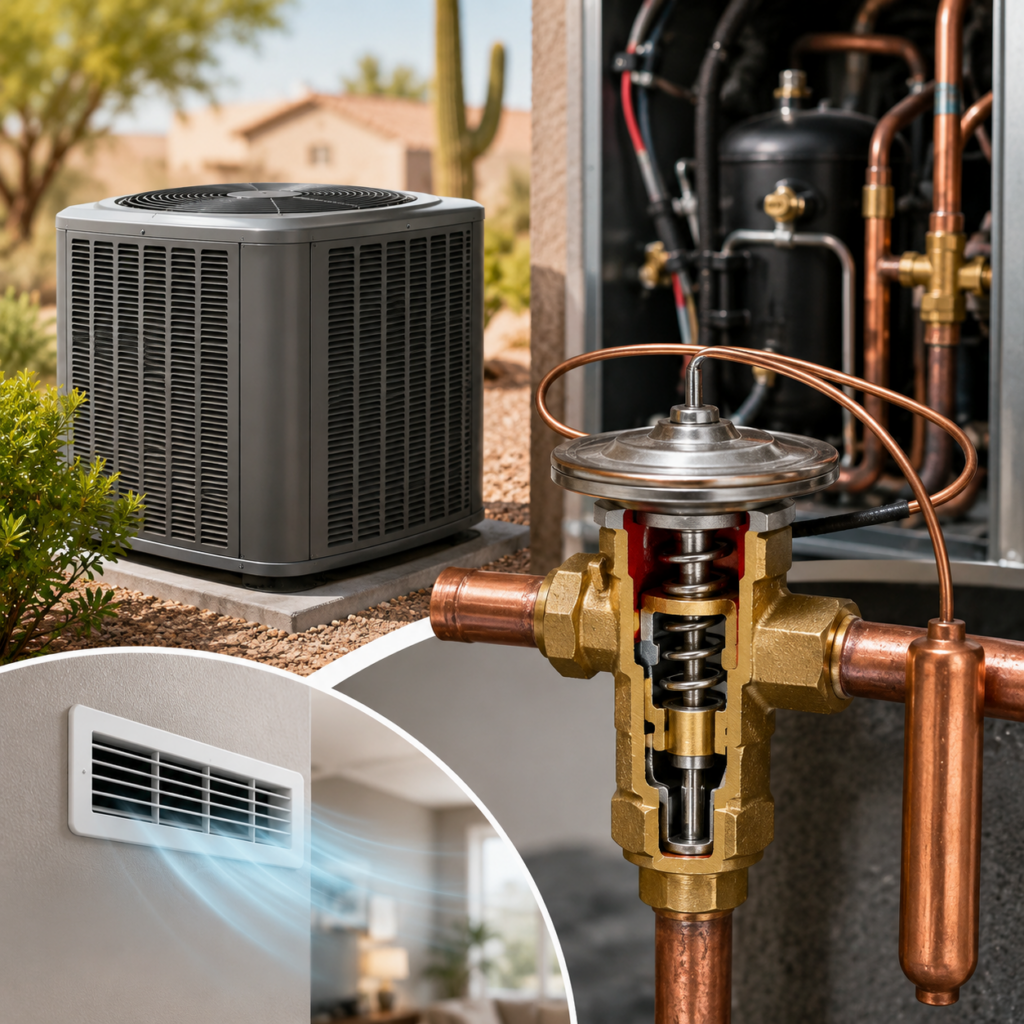
What Does an Expansion Valve Do in an HVAC System?
The Expansion Valve controls the amount of refrigerant entering the evaporator coil. Its primary job is to reduce refrigerant pressure before the refrigerant reaches the indoor coil.
As refrigerant travels through an air conditioning system, it changes pressure and temperature. The expansion valve creates the conditions needed for that process. Without proper regulation, the cooling cycle would not function correctly.
This component acts like a traffic controller. It determines how much refrigerant should enter the evaporator based on cooling demand.
Consequently, the system can maintain comfort while operating efficiently.
How the Expansion Valve Fits Into the Cooling Cycle
To understand its purpose, it helps to look at the entire cooling process.
First, the compressor pressurizes the refrigerant and sends it to the condenser coil. Heat is released outdoors during this stage.
Next, the refrigerant travels toward the expansion valve. Here, the pressure is suddenly reduced.
As a result, the refrigerant becomes much colder before entering the evaporator coil. The cold refrigerant absorbs heat from indoor air.
Then, cooled air is distributed throughout your home. Finally, the refrigerant returns to the compressor, and the cycle repeats.
Each step depends on proper refrigerant flow. Therefore, a malfunctioning valve can affect the entire system.
Types of Expansion Valves Found in HVAC Systems
Several types of expansion valves are used in residential and commercial equipment.
Thermostatic Expansion Valve (TXV)
A TXV is one of the most common options found in modern systems.
This valve automatically adjusts refrigerant flow based on cooling demand. It helps maintain efficiency under changing conditions.
Many homeowners in Gilbert, AZ prefer systems equipped with TXVs because of their energy-saving benefits.
Electronic Expansion Valve (EEV)
Electronic valves use sensors and controls to regulate refrigerant flow with greater precision.
These systems are often found in high-efficiency equipment.
Because adjustments happen continuously, performance can be optimized throughout the day.
Fixed Orifice Devices
Some HVAC systems use a fixed opening instead of a variable valve.
These devices are simpler and less expensive. However, they cannot adapt to changing conditions as effectively.
As a result, efficiency may be reduced compared to advanced valve designs.
Signs of a Failing Expansion Valve
Like any HVAC component, expansion valves can wear out over time.
When problems occur, cooling performance often suffers.
Watch for these warning signs:
- Warm air coming from vents
- Frozen evaporator coils
- Reduced cooling capacity
- Higher energy bills
- Short cycling
- Unusual temperature fluctuations
- Increased humidity indoors
Sometimes these symptoms resemble other HVAC problems. Therefore, professional diagnosis is recommended.
A trained technician can determine whether the valve is causing the issue or if another component requires attention.
What Causes Expansion Valve Problems?
Several factors can lead to valve failure.
Contamination is among the most common causes. Dirt, debris, or moisture can enter the refrigerant system and interfere with valve operation.
Wear and tear may also occur as components age.
In some cases, refrigerant leaks create pressure imbalances that affect valve performance.
Additionally, improper installation can contribute to premature failure.
Regular maintenance helps identify these issues before major damage occurs.
Why a Faulty Expansion Valve Should Not Be Ignored
Some homeowners delay repairs when their system continues operating.
Unfortunately, small HVAC issues often become larger problems.
A malfunctioning valve can force the compressor to work harder than necessary. This added strain may reduce equipment lifespan.
Energy consumption can also increase.
Furthermore, uneven cooling may make indoor spaces uncomfortable during Arizona’s hottest months.
Addressing the issue promptly may prevent more expensive repairs later.
Can an Expansion Valve Be Repaired?
In many situations, replacement is the preferred solution.
Because expansion valves are precision components, repairs are not always practical.
An HVAC technician will inspect refrigerant pressures, system performance, and component condition before making recommendations.
If replacement is necessary, the refrigerant system must be serviced properly.
This work should always be completed by a licensed professional.
Attempting DIY repairs can lead to additional damage and safety concerns.
How Arizona Heat Affects HVAC Components
Residents throughout Gilbert, Mesa, Chandler, Queen Creek, and surrounding communities rely heavily on air conditioning during summer.
Daily temperatures often exceed 100 degrees.
Because HVAC systems operate for longer periods, components experience increased stress.
Expansion valves must continuously adjust refrigerant flow to meet cooling demands.
Consequently, routine inspections become especially important in Arizona’s climate.
Preventive maintenance helps ensure every component performs as intended.
How Routine Maintenance Protects Your HVAC System
Professional maintenance visits allow technicians to inspect critical system components.
Refrigerant pressures can be tested.
Electrical connections can be evaluated.
Airflow measurements can also be taken.
During these inspections, technicians may identify early signs of valve problems before they lead to system failure.
As a result, homeowners can often avoid unexpected breakdowns during peak cooling season.
Regular service also supports efficiency and comfort.
Trust Sunset Home Services for HVAC Repair in Gilbert, AZ
An expansion valve may be small, but its role in your HVAC system is significant. When this component fails, cooling performance, efficiency, and comfort can all be affected.
If you’re experiencing uneven cooling, frozen coils, or rising utility costs, professional HVAC repair may be needed. The experienced team at Sunset Home Services serves Gilbert, Mesa, Chandler, Queen Creek, and nearby Arizona communities with dependable HVAC solutions.
Whether your system requires diagnostics, maintenance, or repairs, Sunset Home Services can help keep your home comfortable through every Arizona season.